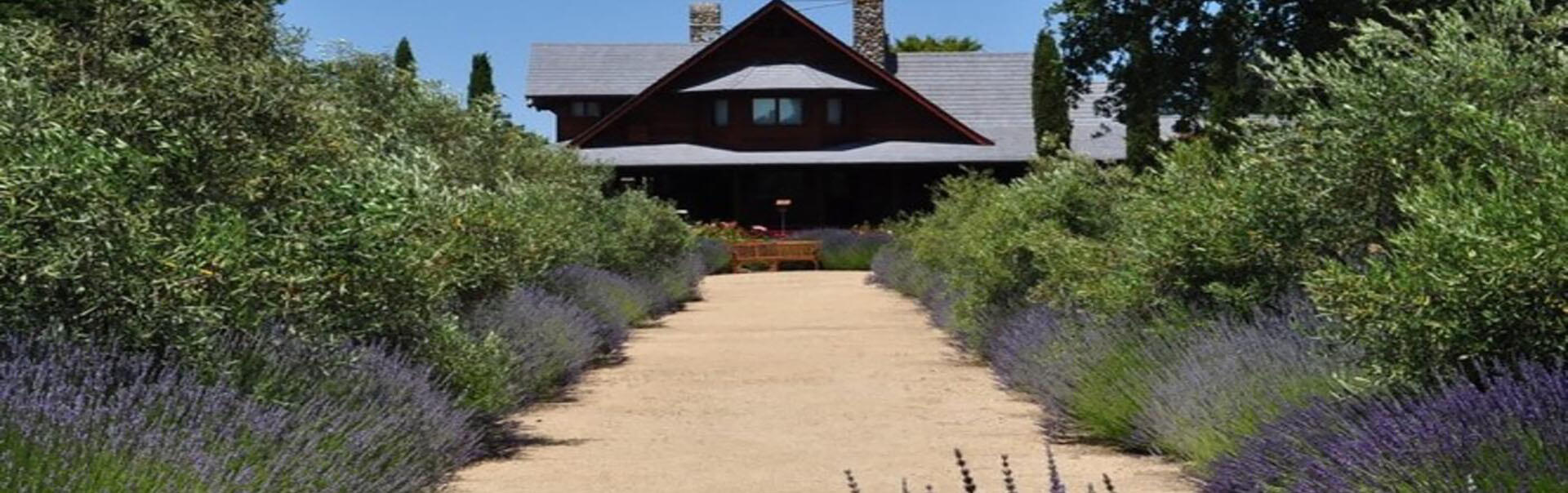
 |

We started PolyPavement
as an independent company in 1996. PolyPavements Natural
Soil Pavement technology was developed by ECO-Polymers in 1989. ECO-Polymers
was established in 1982. ECO-Polymers is a privately owned polymer-soil
technology development company. Currently, ECO-Polymers provides soil
stabilization materials and application technology for roadway infrastructure
construction in developing countries.
ECO-Polymers was
the first and only company of its kind to develop soil stabilization
and soil solidification technology suitable for creating an all-weather,
abrasion-resistant wear-surface made of natural soil, utilizing high
technology polymer binders, the physics of soil particle void fillers,
and soil particle re-polarization chemistry. And
for the first time in industrial history, the notion of converting ordinary
dirt into rock-solid pavement became a reality. By making
use of one or more aspects of the technology, an all-weather paved road
and sub-structure capable of carrying any traffic load could be constructed
in the poorest soil at a fraction of the cost of a conventional asphalt
or concrete paved road. ECO-Polymers road construction technology
has proven to be indispensable to developing countries.
As early as 1987
ECO-Polymers recognized the need for an easy-to-install, user-friendly,
soil solidifying product that could be used by landscapers, contractors
and do-it-yourself property owners to make natural soil pavement. This
product would give the user the ability to convert the in-place soil
into a mud-free, dust-free pavement with wear characteristics that rival
asphalt and has the appearance of natural soil. By 1989 ECO-Polymers
had developed a soil solidifier for the landscape market called
ECO-CF Soil Binder. CF stands for Custom Formulated. It was a blend
of high-tech water-based polymer emulsions with the ability to cross-link,
coat and bind the tiniest soil particles tenaciously. It contained no
soil particle void fillers. ECO-CF Soil Binder performed fantastically
in traffic and non-traffic applications. In 1989 we established Evergreen
Polymer Applications, a California-based contractor company that offered
polymer-soil application materials and installation services. We offered
Natural Soil Pavement as an end product.
After several years
of installing ECO-CF Soil Binder and perfecting the field application
processes, we began to realize that though the field-application methods
were specific to ECO-CF Soil Binder, the work could be done quite readily
by anyone who understood how to lay, grade and compact soil.
In 1991, shortly
after ECO-CF Soil Binder was developed, the US
Army Corps of Engineers solicited manufacturers of soil stabilization
products and application technology to participate in a two-year laboratory
and field study. The study was designed to identify all of the existing
products that could be applied to soil easily (by troops) and best met
the Corps performance criteria for traffic areas and non-traffic
areas. Actually the Corps did a similar study in the early 1970s.
The first study determined that no products existed in the early 1970s
that met the Corps performance criteria. The second study looked
at products that had been developed in the 20 years or so that had passed
since the first study. Three hundred and fifteen products and methods
were submitted to the Corps for the 1970s study and thirty-five
were submitted for the 1991 study. A substantial number of the submittals
were water-based polymers.
ECO-Polymers submitted
just one polymer product, ECO-CF Soil Binder and several spray-on
application methods for the Corps study. Our submittal was called
Dirt Glue and/or Sand Glue, a trade name that was used by one of ECO-Polymers
licensed distributors. Dirt Glue / Sand Glue was to be applied by simply
diluting it with water and spraying it onto the soil surface for traffic
area applications and non-traffic area applications. The Corps tested
all of the products under laboratory conditions first. Only the products
that passed the laboratory tests qualified to be tested in the field.
There were 7 of 35 products in the 1991 study that passed the laboratory
tests and qualified for field-testing. This compares to 18 of the 315
products in the 1970s study. Surprisingly, none of the polymer
products passed the lab tests in the 1970s study. And only one
of the soil stabilization polymers passed the Corps
laboratory criteria
in the 1991 study. The only polymer product that passed the laboratory
tests was Dirt Glue / Sand Glue. None of the other polymer products
qualified for the field-application portion of the study. Many of the
polymers that failed to meet the Corps minimal performance criteria
remain on the market today as soil stabilization or dust
control polymers. One of those old products is actually registered
now under the trade name DirtGlue. This product name could be confusing
because it is not Dirt Glue; it is not ECO-CF Soil Binder; and it is
not recommended by the U.S. Army Corps of Engineers for soil applications.
The results of the
field-application portion of the Corps study showed that ECO-CF
(Dirt Glue) out-performed everything else. ECO-CF was the only product
that utilized an easy-to-apply spray-on application method for traffic
areas. ECO-CF was the only product that met or surpassed all of the
Corps performance criteria for traffic area and non-traffic area
applications. Only two of the non-polymer products passed any of the
Corps performance criteria for traffic area applications and both
of them had to be mixed into the soil 4 inches or more instead of spraying
onto the soil surface. The results of the Corps study clearly
established that ECO-CF Soil Binder was notably superior to any and
all other soil stabilization polymers in existence as well
as the non-polymer soil stabilization materials.
During the seven
years that we completed soil stabilization and soil solidification projects
as installation contractors, we developed the full gamut of application
methods around the physical and chemical characteristics of ECO-CF Soil
Binder. During that time, ECO-Polymers improved the formulation for
ECO-CF Soil Binder. We changed the name of
the soil binder to PolyPavement. And in 1996 we started a new
company with the same name. We no longer do installation projects. We
offer PolyPavement Soil Solidifier and product-specific application
technology to landscape architects, contractors and do-it-yourself property
owners who want Natural Soil Pavement. We are now known as:

| PolyPavement
WEAR SURFACE AND SURFACE LIFE |
Wear Surface:
PolyPavement is a liquid soil solidifier. It is not
merely a soil stabilizer. PolyPavement converts ordinary
dirt into a rock-solid wear surface that rivals asphalt and concrete.
Though a PolyPavement wear surface is not as strong as concrete,
it is several times stronger than asphalt. In fact, a properly installed
PolyPavement natural soil wear surface is tough enough to actually
burn rubber when tires spin during fast starts by aggressively
driven vehicles. This capability puts PolyPavement in a class
of its own. Other water-based polymer soil stabilizers are primarily
used for dust control. They cannot be used to make a permanent roadway
wear surface.And the many soil stabilization polymers, enzymes and
other materials that are used successfully in road construction, are
only used to strengthen or stabilize the road base and/or the road
sub-grade but they are not capable of producing a rock-solid roadway
wear surface.
Surface Life:
For the most part, it is impossible to predict how long a mix-in application
of PolyPavement will last before maintenance is required. This
is because the life of a PolyPavement surface depends on several
factors other than time. The other factors are:
1. How the surface was treated with PolyPavement in the
initial application.
2. The actual wear (abrasive action) the surface is subjected to as
it is used.
3. The friability (lack of hardness) of the particles of the soil
that is used.
4. The actual weather conditions the surface is subjected to.
When we are asked
how long will the PolyPavement surface last we
say from 5 to 10 years with no maintenance under normal wear
conditions. This is a good general estimate based on our experience.
If the surface is subject to extremes of the factors listed above,
the surface will need a maintenance application of PolyPavement
sooner than it would if not subjected to extreme conditions.
1. How the
surface was treated with PolyPavement in the initial application
is important. Normally we specify a Toughening Coat application
of PolyPavement to give the surface additional resistance to abrasive
wear. However, when the surface is given this treatment for extra
strength, the appearance of the surface looks a little less like natural
soil than when it does not receive the Toughening Coat
treatment.
2. The actual
wear (abrasion) the surface is subjected to as it is used is obviously
very important. Abrasive action from foot traffic or rubber tires
is cumulative. Ten thousand vehicles causes exactly twice the wear
as five thousand vehicles. And one hundred thousand pedestrians causes
exactly half the wear of two hundred thousand pedestrians.
3. The friability
(lack of hardness) of the particles of the soil that is used to
make the Natural Soil Pavement plays an important role in surface
strength that can be easily overlooked. In relative terms, some soil
particles are hard and others are soft. The
harder the soil particles, the more resistant the pavement is to wear
and tear. Generally speaking, hard soil particles are
silica sand or crushed quarry rock. Soft soil particles are
limestone screenings or decomposed granite. Ordinary dirt can consist
of various proportions of hard and soft soil particles. Decomposed
granite is widely used for PolyPavement applications. Sometimes
the rocks in decomposed granite and limestone screenings are highly
friable and can be crumbled by hand. This soft rock can
be successfully used for natural soil pavement, however it will not
resist wear as well as pavement made using harder soil particles.
4. The actual
weather conditions the surface is subjected to can be a factor
if the weather is extreme. If a properly dried and cured PolyPavement
surface happens to be subjected to continuous wet weather for sustained
periods of time (two weeks or so), the surface will weaken. In the
weakened state, the surface is less resistant to abrasion. Other weather
factors, sun, snow, temperature extremes have little affect on the
life of a PolyPavement surface.
Though many factors
contribute to the life of a PolyPavement surface, it is reasonable
to expect the PolyPavement surface to last for 5 to 10 years
without a maintenance application.
It is important
to note that a PolyPavement surface never has to be removed
and replaced as required with asphalt. When a PolyPavement
surface is worn to the point of needing repair, more PolyPavement
can be added to the surface for a fraction of the cost of the original
application. (See Maintenance & Repair below).
PolyPavement
is easy to maintain and repair. A PolyPavement surface is
maintained by spraying properly diluted PolyPavement Soil Solidifier
directly onto the surface and allowing it to dry. Repairs are accomplished
by spreading pre-mixed soil and PolyPavement Soil Solidifier
onto the damaged and/or worn surface and compact it onto the old
PolyPavement surface. Additionally, a slurry-like mixture
of PolyPavement and soil can be poured into place to resurface
or repair damaged portions of PolyPavement.
Properly installed
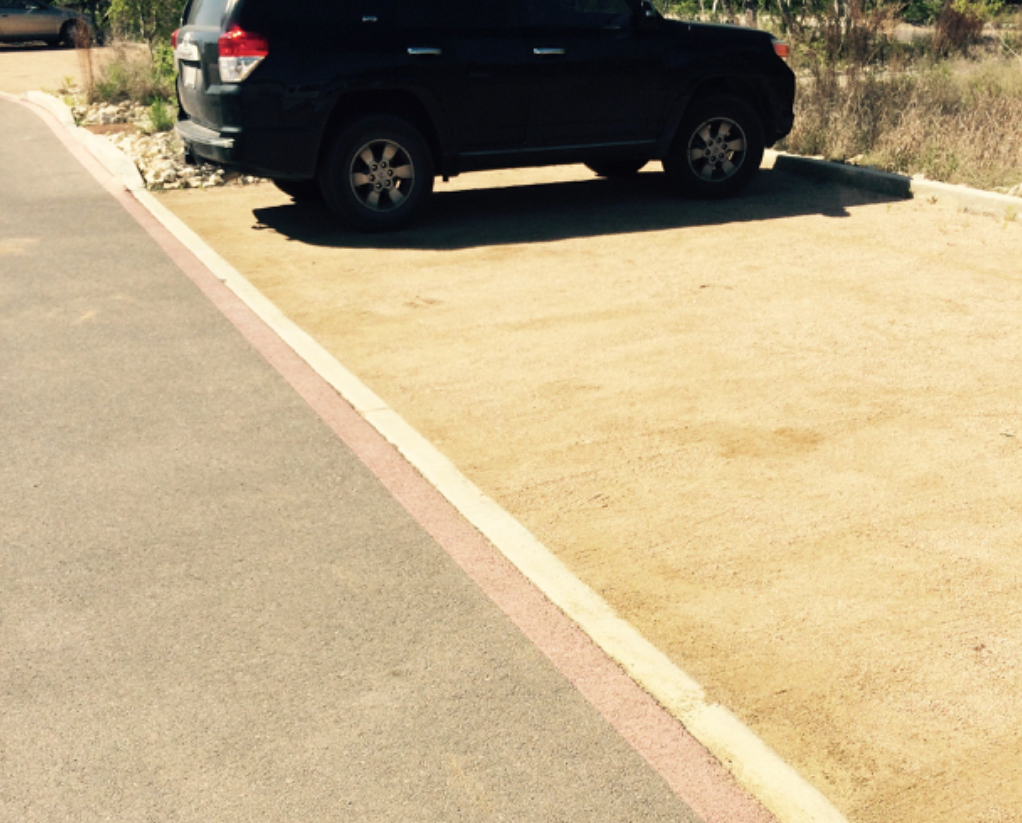
PolyPavement Soil Solidifier produces Natural Soil Pavement
that has more than twice the supportive strength of asphalt. PolyPavement
is categorized as a rigid pavement. Under normal conditions of low
frequency traffic and moderate weather, a two-inch thick PolyPavement
application can be expected to provide a maintenance-free all-weather
surface for approximately 5 to 10 years. However, PolyPavement
should be given periodic spray-on maintenance applications. Maintenance
applications prevent deterioration and the need for maintenance
applications is infrequent.
Whether or not
PolyPavement is maintained, PolyPavement does not
deteriorate in a manner that requires it to be removed and replaced.
The sun's UV rays weaken the PolyPavement soil particle bond
at the surface. The weakened bond coupled with repeated tire contact
tends to abrade tiny particles from the surface and, after a few
years, the surface texture becomes rough. Given more time, the surface
loses more fine soil particles and becomes rougher.
To keep PolyPavement
looking as if it is newly installed, a spray-on maintenance
application of diluted PolyPavement Soil Solidifier should
be completed before the natural soil pavement surface loses any
soil particles and becomes rough. The maintenance application will
re-strengthen the surface bonding and reverse the damaging affects
of the sun's UV rays. If the natural soil pavement surface has lost
a significant amount of soil particles and has become worn and rough,
a spray-on maintenance application will toughen the surface but
a spray on application cannot make a rough surface smooth.
A PolyPavement
surface still resists traffic wear when the surface has worn, but
the surface will not have the finished appearance that it had when
the PolyPavement Soil Solidifier was initially installed.
MAINTENANCE
AND REPAIR METHODS
---1.
MAINTENANCE
Spray-on
diluted PolyPavement Soil Solidifier and allow it to dry.
At the first
sign of soil loss, a spray-on maintenance application should be
completed. A spray-on maintenance application is accomplished by
soaking the PolyPavement natural soil surface with diluted
PolyPavement Soil Solidifier. The dilution rate should be
set at approximately 20 parts water to 1 part PolyPavement Soil
Solidifier. The diluted PolyPavement Soil Solidifier
should be spray-applied directly onto the natural soil pavement
surface at the maximum amount that it can be applied without run-off
(approximately 0.20 gallon of diluted PolyPavement Soil Solidifier
per square yard). The surface should then be allowed to dry before
it is used.
Batch
mix PolyPavement Soil Solidifier with Soil, Spread and
Compact into Place.
Once PolyPavement
has become worn and rough or in the event that the surface has
been damaged and needs repairing, the surface can be repaired
by applying a mixture of PolyPavement Soil Solidifier
and soil directly onto the worn and/or damaged PolyPavement
surface.
The PolyPavement
Soil Solidifier and soil batches are mixed using only the
finer particles of the same soil that was used for the initial
application and the same percent of PolyPavement Soil Solidifier.
First the surface of the existing worn and/or damaged PolyPavement
is cleared of debris and sprayed with diluted PolyPavement
Soil Solidifier, then spread the batch mix evenly onto the
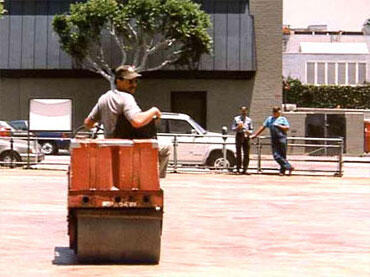
soil surface and compact with a steel drum roller or hand-held
tamper.
Batch-mix
PolyPavement Soil Solidifier with Soil, Pour or Trowel
into Place.
Once PolyPavement
has become worn and rough or in the event that the surface has
been damaged and needs repairing, the surface can be repaired
by pouring a slurry-like mixture of PolyPavement Soil Solidifier
and soil directly onto the worn and/or damaged PolyPavement
surface and allowing it to dry.
The PolyPavement
Soil Solidifier and soil batches are mixed using only the
finer particles of the same soil that was used for the initial
application and the same percent of PolyPavement Soil Solidifier.
The slurry-like batch mix is prepared by adding more water to
the mix so the mix becomes wet enough to spread or pour. First
the surface of the existing worn and/or damaged PolyPavement
is cleared of debris and sprayed with diluted PolyPavement
Soil Solidifier. Then the batch mix is poured onto the surface
and troweled evenly over the entire surface and allowed to dry.
|
FREEZING WEATHER CONDITIONS |
PolyPavement
may be installed in climates where the temperature can dip to below
zero with confidence. However, PolyPavement must be installed
when the temperature is above 42 °F and the temperature has
to remain above 42 °F for a sustained period of time sufficient
to allow the newly installed PolyPavement to dry and cure.
This means that in a climate that has seasonal changes in temperatures,
PolyPavement must be installed early enough in the warm season
so that a freeze does not occur before the PolyPavement has
thoroughly dried. If a new PolyPavement installation freezes
before it has thoroughly dried, the PolyPavement might be
damaged beyond repair. Therefore, it is recommended that in the
northern states of the USA, PolyPavement applications be
completed by the end of August.
Once PolyPavement
has dried and cured, it is not damaged significantly by freeze-thawing
conditions. However, in climates where there is snow and ice, we
have to be concerned with the methods and materials that are used
to deal with snow and ice. The removal methods a well as chemical
deicers might cause damage to a PolyPavement surface.
Snow
Plows and Snow Shovels:
Normally a snow plow or snow shovel will not damage any kind of
pavement whether it be asphalt, concrete or PolyPavement.
However, if a snow plow should happen to catch its edge on an already
damaged or cracked portion of the pavement or catch its edge on
a junction box or manhole cover there is a potential for serious
damage. If a snow plow is to be used on any pavement, care should
be taken to avoid conditions where the snow plow might catch an
edge.
A worn rough
PolyPavement surface is more likely to be damaged by a snow
plow than a smooth finished PolyPavement surface. The reason
for this is the worn PolyPavement surface is more likely
to have small pebbles and rocks that protrude from the surface.
If a snow plow catches a protruding pebble, the pebble will be popped
out of the PolyPavement. If the PolyPavement surface
has a high number of protruding rocks, a snow plow could be very
damaging.
Chemical
deicers: Chemical deicers are surface acting agents.
These agents are employed because they have the ability to break
the bond between the ice and the pavement and thereby prevent the
ice from attaching tenaciously to the pavement surface. Some of
these deicers have the ability to break the bond between PolyPavement
Soil Solidifier and soil particles. As a matter of interest,
if residual chemical deicers migrate to roadway shoulder soil that
has not been treated with PolyPavement Soil Solidifier,
the deicer becomes a soil contaminant that prevents the soil from
being treated successfully with PolyPavement Soil Solidifier.
Salt, for the
most part, is not structurally damaging to a PolyPavement
surface. But salt dissolves in water and it tends to build up on
the surface and discolor the pavement.
The preferred
way to remove snow from a PolyPavement surface is with a
snow blower. And sand would be preferred over salt to mitigate the
hazard caused by ice on PolyPavement.
Heaving:
Another type of damaging condition that occurs in cold climates
is called heaving. Our understanding is water in the pavement and
in the sub grade freezes and expands. The pavement and sub grade
expand and move in an upward direction. If the upward force is sufficient,
it will crack the pavement. Heaving occurs in asphalt and concrete.
The tendency to heave can be reduced significantly by managing the
flow of water away from the pavement surface and away from the sub
grade.
With regard
to heaving, PolyPavement is less likely to be damaged than
asphalt or concrete. PolyPavement can be installed so that
water cannot penetrate the surface. However, if water finds its
way to the sub grade, heaving is more likely to occur. An additional
measure to reduce the tendency for PolyPavement to heave
is to specify that a crushed rock base be placed under the PolyPavement
before it is installed.
Though a properly
installed PolyPavement wear-surface resists freeze-thaw damage,
it should be mentioned as a precaution that freeze-thaw damage will
occur and could be very severe if a PolyPavement wear-surface
is installed directly on top of a sub-grade that has not been properly
prepared to address local ground water levels or surface water conditions.
If a PolyPavement
wear surface is installed on top of a sub-grade that is not elevated
or built-up sufficiently above the ground water level, then the
ground moisture will seep slowly from a lateral direction into the
sub-grade soil and seep slowly into the PolyPavement wear-surface.
PolyPavement has high resistance to surface water penetration
but it is not resistant to water invasion from a lateral direction
or from beneath. After a period of days or weeks, the water will
thoroughly seep into the PolyPavement. If the water remains,
it will weaken the PolyPavement bond, but when it dries,
the strength of the bond returns. However, if the PolyPavement
should happen to freeze while the water is present, the expanding
water/ice within the soil particles will break the polymers' bond
between the soil particles permanently. When the wet-frozen PolyPavement
thaws-out, the treated soil will be nothing more than wet dirt (mud)
and PolyPavement will have to be re-installed.
This potential
freeze-thaw problem is prevented by using sound road building techniques
such as placing a crushed rock road base material atop the compact
sub-grade several inches thick. Next, install a layer of compacted
soil on top of the crushed rock and then treat the soil with PolyPavement.
A geo-textile material might also be incorporated in the design.
For detailed drawings of the basic designs, follow our website links
to the caddetails website, login and review CAD drawings 3 and 4
under Installation Details.
|
WET CLIMATE OR PERMANENT GROUND MOISTURE CONDITIONS |
Wet climate
and permanent ground moisture conditions are a potential problem
for a PolyPavement installation. Though PolyPavement
works well in wet climates, when PolyPavement is first installed
it must be allowed to dry. If the climate or the ground moisture
conditions do not have alternating cycles of wet conditions and
dry conditions that allow naturally existing wet muddy soil to dry,
then soil treated with PolyPavement will not have conditions
that allow it to dry. It can rain daily on a PolyPavement
surface that has been allowed to dry without damaging it, but it
must first be allowed to dry.
PolyPavement
can be used successfully in wet climate conditions where the surface
soil remains continuously damp due to a high water table. In this
case, the trail or roadway surface must be elevated above the ground
moisture level. This can be done by first installing a supportive
bed of gravel road base material and then installing the soil that
is to be treated with PolyPavement on top of the supportive
road base material. A supportive bed of gravel road base material
will prevent groundwater from seeping into the PolyPavement treated
soil from beneath. Obvious areas where a supportive gravel road
base material should be installed are swamps, marshes and rain forests.
PolyPavement
Soil Solidifier is a water based polymer emulsion. The presence
of water in the emulsion prevents the polymers from polymerizing
or solidifying. When PolyPavement Soil Solidifier is applied
to soil to make natural soil pavement, it is mixed into the soil
wet, compacted and allowed to dry. Drying is absolutely essential
for a successful PolyPavement application. If a PolyPavement
application does not dry, it remains as nothing more than wet dirt
until it dries.
PolyPavement
cannot be installed during a rain. After PolyPavement
is properly installed, it remains resistant to water invasion in
its cured state. Prior to drying, water will adversely affect the
application. Precautions should be taken to avoid wetting newly
installed PolyPavement before it has had the opportunity
to dry.
Properly installed
PolyPavement resists water invasion in a manner that is more
like asphalt than concrete. Concrete has water-resisting characteristics
that allow it to be used to channel flowing water continuously with
little or no damage. However asphalt cannot be used to channel flowing
water without eroding. But asphalt has high resistance to sheet-flowing
water.
Since PolyPavement's
water-resistance characteristics are like asphalt and does not do
well with channel flowing water, there is a need for good drainage
design and water management. A PolyPavement surface should
be contoured and sloped to drain in a manner that allows every drop
of water that hits it to sheet-flow off the surface using the shortest
route possible. The PolyPavement surface should not be sloped
to drain using the pavement surface to carry the water a long distance
before it finds its way off of the surface. At locations where a
naturally flowing rainwater run-off channel has to cross the PolyPavement,
there could be a need to install a sub-surface drain to prevent
the rainwater run-off from damaging the PolyPavement surface.
PolyPavement
Soil Solidifier works well in all types of "clean"
naturally existing soils that are free of contamination (man-made
and free-existing chemicals). All that is required of the soil for
PolyPavement Soil Solidifier to work excellently is that
the soil have a sufficient proportion of fine particles to provide
maximum particle contact points and minimum void space between the
soil particles. Most naturally existing soil meets the suitability
requirements for a PolyPavement Soil Solidifier application,
but some soil may not be suitable. PolyPavement Soil Solidifier
also works well in suitable sand and it works well in suitable crushed
quarry rock.
Obviously, the
question of the suitability of the soil, the sand or the crushed
quarry rock must be answered positively before proceeding with a
PolyPavement application.
PolyPavement
has determined that the suitability of soil, sand or crushed
quarry rock depends on whether it has sufficient self-cohesiveness.
If the soil, sand or crushed quarry rock holds together in a clump
when it is moistened properly and squeezed tightly in the hand,
the soil has a measure of natural cohesiveness and it might be suitable
for a PolyPavement application.
If the soil
clump is gently broken and it breaks apart in two clean pieces then
the soil has a sufficient measure of natural cohesiveness for a
PolyPavement Soil Solidifier application. But, if the soil
clump breaks apart into many pieces when it
is gently broken, then it is unsuitable for a PolyPavement
application.
In-Place
Soil: Most existing in-place soil meets the minimum requirements
for a PolyPavement application. However, the in-place soil
more often does not meet the architect's aesthetic requirements.
When the in-place soil does not meet the aesthetic requirements,
a suitable sand or crushed quarry rock is imported for the PolyPavement
application.
Sand:
Sand, like the in-place soil, must be tested for suitability. Most
sand that is offered for sale by local suppliers has been washed
and all of the fine sand particles have been removed. It is unlikely
that sand that has no fine particles will pass the soil suitability
test. And if it happens to pass the soil suitability test, it will
probably pass marginally. When a sand or soil-like material passes
the soil suitability test marginally, it is necessary to increase
the amount of PolyPavement Soil Solidifier to assure sufficient
binding strength. Normally, the specified concentration of PolyPavement
Soil Solidifier is 2% by volume of compact soil, but for marginal
granular soils, the concentration of soil solidifier could be specified
at the maximum concentration of 2.5%. The precise percent concentration
of PolyPavement Soil Solidifier to use in a marginal soil
is determined by making samples under controlled laboratory conditions.
Crushed
Quarry Rock: Crushed quarry rock, like sand and the in-place
soil, must be tested for suitability. If a particular gradation
of crushed quarry rock (i.e. three-eighths minus) happens not to
pass the soil suitability test, another gradation can be specified
(i.e. one-quarter minus or one-eighth minus). The quarry operator
has the ability to provide a crushed rock that passes the soil suitability
test.
It should be
noted that clean crushed quarry rock that is absolutely free of
clay and has sufficient quarry fines to provide the contact points
necessary for binding may not hold together well when subjected
to the soil suitability test. It might appear to fail the test.
However, clean crushed quarry rock with sufficient fines is one
of the best materials to use with PolyPavement. When a question
about the suitability of a clean crushed quarry material arises,
an actual laboratory sample should be prepared to confirm that the
quarry material has sufficient fines for good binding.
Clay
Soils: Clay soils have lots of fine particles and clay
soils will normally pass the soil suitability test. PolyPavement
Soil Solidifier works well in some clay soils however, soils that
have an extremely high clay content are not recommended for treatment
with PolyPavement Soil Solidifier. When the soil has extremely
high clay content, the soil is very expansive when wet and it is
extremely difficult to work with in PolyPavement applications.
Also, when soil with a high clay content dries, it forms many unwanted
surface cracks. However, unsuitable clay soils can be ammended with a coarse sand or crushed quarry-rock to make them more absorbent, easier to work with and less proned to cracking. A PolyPavement tech can help you determine the right ratio.
|
STRENGTH OF THE TREATED SOIL |
The strength
of soils that have been treated with PolyPavement Soil Solidifier
depends on these factors:
1.
The amount or degree of natural cohesiveness of the soil (soil suitability).
2. The amount or the percentage of PolyPavement Soil Solidifier
that was added to the soil.
3. Whether or not the treated soil has fully dried and cured.
4. The actual hardness or strength of the soil particles themselves
before treatment.
Though all of
these factors affect the strength of the treated soil, the factors
that have the greatest affect on the actual end results are: 1)
the soil passing the soil suitability test and 2) the PolyPavement
Soil Solidifier is applied at the level of concentration specified/required
according to the application instructions provided by PolyPavement's
technical staff.
If the soil
passes the soil suitability test and the concentration of PolyPavement
Soil Solidifier is specified at 2% by volume of compact soil;
then the unconfined compressive strength of the treated soil will
be in the range of 800 to 2,200 pounds per square inch (psi).
If a relatively soft rock such as limestone or decomposed granite
is used in the PolyPavement mix, the resulting strength will
be at the lower end of the range. If a relatively hard crushed stone
is used in the PolyPavement mix, then the resulting strength
will be at the higher end of the range. The strength of all other
treated soils will fall somewhere in the middle of the range.
The strength
measures are appreciated when the strength of PolyPavement is
compared to the strength of asphalt and concrete. The unconfined
compressive strength of asphalt tests in the range of 250 psi
to 300 psi. Concrete, on the other hand tests in the range
of 4,000 psi to 5,000 psi. From these comparisons,
soil that has been treated properly with PolyPavement Soil Solidifier
is more than twice the strength of asphalt. However, concrete is
more than twice the strength of PolyPavement.
PolyPavement
is classified as a rigid pavement. It has more flexibility than
concrete but not enough to be regarded as flexible pavement like
asphalt. Though PolyPavement is classified as rigid, PolyPavement
is not affected by heat expansion and contraction like concrete
and PolyPavement does not need any expansion joints. The
polymers that comprise PolyPavement Soil Solidifier are very
flexible in the dry/cured state. The polymers coat each soil particle
and bind them with a flexible material that acts like an expansion
joint between each and every soil particle. This allows sufficient
room for the soil particles to expand and contract without affecting
the pavement structurally.
|
BASE AND SUBGRADE REQUIREMENTS |
The
Base and Subgrade Provide the Foundation: PolyPavement
is a natural soil surfacing material. Asphalt and concrete are also
surfacing materials. In order for a surfacing material to support
a vehicle, the surfacing material must have a supportive foundation.
The foundation of a pavement surface is referred to as the "subgrade".
The subgrade is at the bottom of the roadway section and the material
that is placed between the subgrade and the pavement surface is
called the "base". The base and the subgrade work together
to provide support for the pavement and to mitigate problems caused
by various weather/climate conditions.
The existing
soil compacted to plus 90 percent is normally specified for the
subgrade material for low-traffic roadways. Compacted soil will
support any weight of rubber tire vehicle as long as the soil remains
dry. The base material that is normally specified for low-traffic
roadways is crushed quarry rock. The crushed quarry rock provides
a buffer between the subgrade soil and the pavement that helps prevent
damage to the pavement surface. However, in dry climates with "good
soils", the sub-grade soil is often used as the base material
without crushed quarry rock.
With asphalt
and concrete, water often enters the base and/or the subgrade from
above by seeping through cracks in the pavement surface. Water also
enters the sub-grade laterally (from the sides) and from beneath
as a result of poor drainage or a high water table.
When water finds
its way to the sub-grade, it weakens the sub-grade soil immediately
upon contact. If a crushed rock base is present, the water will
not weaken the crushed rock.
When water weakens
the subgrade, the weight of the traffic that passes over the weak
spot causes the pavement to "pump". Pumping is an up and
down action that is caused to happen repeatedly directly over the
weak spot as vehicles pass. Soon afterwards, the pavement breaks
and crumbles and a pothole forms.
PolyPavement
Base and Subgrade Requirements:
Of course PolyPavement requires a supportive foundation.
And like asphalt and concrete, the existing soil compacted to plus
90 percent provides an excellent subgrade for PolyPavement.
But most often, a PolyPavement surface does not need a crushed
rock base. Instead, the subgrade soil can be used as the base material
for PolyPavement most of the time. PolyPavement is
practically impermeable to water and it is extremely resistant to
cracking. It does not form any structural cracks due to expansion
and contraction or due to normal wearing or weathering. As a factual
point, PolyPavement does not crack unless it is loaded excessively
over a weak sub-grade or structurally stressed by physical forces
strong enough to crack it. Because PolyPavement does not
develop structural cracks, there is a very low probability of water
seeping through a PolyPavement surface and weakening the
subgrade. Therefore, a PolyPavement road design does not
require a crushed rock base to protect the subgrade from water that
might enter through the surface.
However, in
wet areas where the water table is high and the natural drainage
is poor, water management design precautions are recommended and/or
required. Proper drainage should be utilized to manage rainwater
away from the sub-grade. If the water table is high, the roadbed
or the sub-grade should be built up above the water table. Crushed
rock is recommended for building up the roadbed and providing a
base in areas that a high water table.
Drying
and curing is a two-stage process. First PolyPavement
dries and then it cures. Newly installed PolyPavement can
be used as intended as soon as the surface dries.
Drying
time cannot be predicted with to-the-minute accuracy
because drying is a water evaporation process that depends on the
weather. PolyPavement does not set like concrete through
a chemical process. On a hot sunny day the surface will dry within
a matter of minutes. But on a cool cloudy day it could take a full
day for the surface to dry. When planning a PolyPavement
installation, ample time should be allowed for the surface to dry
and it is better to plan on the weather being unfavorable than to
plan on favorable weather.
Curing
time is longer. PolyPavement Soil Soilidifier
contains three basic ingredients. The ingredients are polymers,
water and emulsifiers. Of course the polymers are the active ingredients;
the water is the transport medium for the polymers and the emulsifiers
are surface acting agents that keep the polymers suspended in the
water. Emulsifiers are like soap or a detergent. They make the water
wetter or give water greater ability to wet other materials. On
the plus side, emulsifiers break surface tension and improve the
seepage rate of the water through tightly packed soil particles.
But on the minus side, an emulsifier draws water to itself. As long
as emulsifiers are present in newly installed PolyPavement,
the pavement has low resistance to water invasion.
PolyPavement
has maximum resistance to water invasion after it cures. By design,
the emulsifiers in PolyPavement Soil Solidifier degrade and
lose their effectiveness. The curing time for PolyPavement
is actually the time it takes for the emulsifiers to fully degrade.
The complete curing process takes approximately 30 days. However,
sunlight and daylight greatly increase the speed of the emulsifier's
degrading process and the emulsifiers that exist at the surface
of newly installed PolyPavement degrade almost as quickly
as the surface dries. What this means for newly installed PolyPavement
is the surface becomes resistant to water invasion rather quickly
and an unexpected rain that occurs shortly after installation will
probably not be damaging. However, if flooding or total submersion
occurs before the PolyPavement has cured, the pavement will
not have maximum resistance to water invasion that comes from below
and laterally.
PolyPavement
is easy to install. There is no need to have contractors become
certified installers. PolyPavement is most often installed
by professional landscape contractors and grounds-maintenance personnel.
Landscape contractors, grounds maintenance workers, grading contractors
and paving contractors are capable of becoming competent PolyPavement
installers after reviewing our written application instructions.
PolyPavement Application Engineers are available to discuss
the installation details and answer any installation questions.
PolyPavement
may also be installed by competent do-it-yourselfers. They too need
only to review and follow written application instructions after
discussing the application instruction details with a PolyPavement
Application Engineer.
FINDING
A CONTRACTOR
If you are a
Landscape Architect and you want to find a contractor in your area
to install PolyPavement, just specify PolyPavement
in your construction plans and put the plans out for bids. The bidding
contractors will call PolyPavement technical department for
information about bidding the job. If you have already identified
one or more contractors for the job, and they do not know about
PolyPavement, direct them to this web site. If they have
additional questions, put them in telephone contact with our office.
When they call our technical department, they will be given a detailed
verbal overview of the installation process and they will be shown
how to bid the labor, the equipment and the materials.
If you are not
a Landscape Architect and you want to find a local contractor, the
Blue Book for Building and Construction is an excellent source for
all types of contractors, large and small. When seeking a contractor
located in a given geographical area, visit www.thebluebook.com
and select the desired geographical area and enter the type of contractor.
Normally, PolyPavement is installed by Landscape Contractors,
however Paving Contractors, Excavating Contractors and Road Construction
Contractors certainly have the skills required to install PolyPavement.
The Blue Book website will generate a list of local contractors
with names, contact information, and information about many of the
contractors specialties and experience.
No special equipment
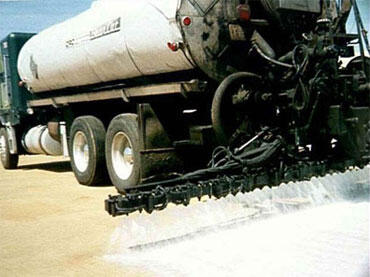
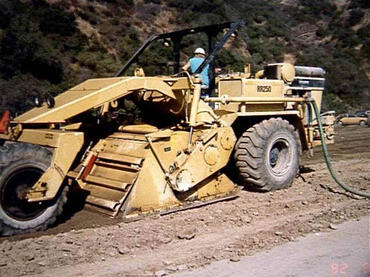
is required for a PolyPavement installation. A spray rig,
a roto-tiller and a steel drum compactor are basic. Most of the
above mentioned types of contractors and grounds maintenance professionals
already have the basic equipment. If they do not have the basic
equipment, it is readily available at equipment rental yards.
For smaller
projects, first identify several potential installers (local contractors)
and ask them for a quote on a natural-soil-pavement installation
project. When the contractor indicates that he has not used PolyPavement,
direct the contractor to this web site and give him/her our phone
number (323 954 2240). If they visit the web site and call our technical
department, they will be shown how to cost-out the labor, equipment
and materials for a PolyPavement installation project.
ASSOCIATED
CONTRACTORS
The list below
contains contact information on contractors that we have worked
with first hand. They are prepared to install PolyPavement and/or
help potential PolyPavement customers located in their respective
areas.
Truman
Jensen
Spraying Services
1425 West 139th Street
Gardena, CA 90249
(310) 329-5360, 324-7221 fax |
Merle
Thomsen
Thomsen Landscape
18800 Erwin St.
Reseda, CA 91335
PO Box 371087
Reseda, CA 91337-1087
Phone:
(818) 344-0158, 345-2029 fax |
| ------------------------------------------------------------------------------------------------------------------------------------------------------------------------------------------------- |
Dave
Koeberle
Valley Coast Construction
3388 Channel Way
San Diego, CA 92110
Phone: (619) 225-9090, 225-8808 fax |
Kip
Searcy
POLYTEK POLYMERS, LLC
300 S. Highland Springs Avenue
Suite 6C176
Banning, CA 92220
Phone: (866) 528-2425, (951) 769-0099 |
| ------------------------------------------------------------------------------------------------------------------------------------------------------------------------------------------------- |
Zafer Kaymaz
Boyut Dizayn Mimarlık Dış Ticaret Ltd.Şti.
Baraj Yolu Caddesi, Mevlana Sokak No:23
ATASEHİR /KADIKÖY
ISTANBUL/TURKEY
Phone1: +90 216 580 9333
Phone2: +90 216 580 9334
Fax: +90 216 580 9335
Mobile: +90 532 353 3906
Email: zafer@boyutdizayn.com.tr
Web Site: www.topraksertlestirici.com |
Hadar
Rahav
Creative Paving Solutions
7119 East Shea Blvd., Suite 109-236
Scottsdale, AZ 85254
Phone: (480) 941-2766, 941-2765 fax |
| ------------------------------------------------------------------------------------------------------------------------------------------------------------------------------------------------- |
Rocky Harlan
Texas Natural Earth Paving
20201 Barnet Glen
Spicewood, Texas 78669
Ph. (512) 731-3248
Fax (512) 264-1648 |
| ------------------------------------------------------------------------------------------------------------------------------------------------------------------------------------------------- |
|
|
APPLICATION PRECAUTIONS, LIMITATIONS AND ENHANCEMENTS |
A.
CURRENT SOIL/AIR TEMPERATURE:
For maximum effectiveness and for the most predictable application
end-results, soil temperatures and ambient air temperatures during
the time that the applied PolyPavement is drying should be no less
than 42 degrees Fahrenheit. At colder temperatures PolyPavement
particles tend to shrink, harden and lose the cross-linking or chaining
characteristic that is necessary for bonding.
B.
COMPACTION:
Soil cannot be compacted properly unless the moisture level is at
Optimum Moisture Content for compaction. Attempts to compact soil
that is slightly over-wet will result in the soil sticking to the
compaction equipment. And over-wet soil will tend to "pump"
or ooze. Do not attempt compaction when the soil is too wet. Wait!
Also, the surface soil cannot be compacted to maximum density unless
the subgrade soil is firm and compact. If the subgrade is hard like
a rock, maximum density is readily achieved. If the subgrade is
soft like a mattress maximum density is impossible to achieve.
C.
CONTAMINATED TANKS, HOSES AND EQUIPMENT:
It is important that storage tanks, application tanks, and transfer
equipment be absolutely free of foreign chemicals. Completely flush
tanks, hoses, and nozzles with water until there is no discoloration
of the water before using them for a PolyPavement Soil Solidifier
application. Small amounts of residual oils or asphaltic emulsion
left in application or storage tanks will interfere with PolyPavement's
polymer particles ability to bind or penetrate the soil.
D.
CONTAMINATED SOIL:
Soil can sometimes be contaminated with chemicals that interfere
with or prevent bonding. It is difficult to detect soil contamination.
Potential contaminants are garden herbicides, chemical de-icing
agents, petroleum oils and other industrial chemicals. The soil
is probably contaminated if (1) drops of water fail to penetrate
the soil or form beads on the surface; (2) the soil does not support
vegetative growth; (3) the soil is light in color when dry and forms
a powdery dust; and (4) the soil is imported fill material from
a former industrial site. Contaminated soil requires removal, replacement
or pre-treatment before a PolyPavement application. If soil contamination
is suspected, do not apply PolyPavement.
E.
DRY SOIL:
For spray-on applications, if the soil is bone dry, it will be necessary
to moisten it slightly with water prior to applying diluted PolyPavement
to promote penetration.
F.
EXCESSIVE POLYPAVEMENT:
Normally, more of a good thing is better. But that is not necessarily
so with PolyPavement. PolyPavement should never be applied to soil
at a concentration greater than 3% by volume of compact soil. If
this limit is exceeded, the strength of the bond does not increase.
Also, the polymer-soil surface might self-seal and the subsurface
will not dry in the time required.
G.
EXCESSIVE RUN-OFF:
If excessive run-off occurs while spray-applying diluted PolyPavement,
the spread rate should be reduced. The spray pass will have to be
completed in two or more successive spray passes to achieve the
required total. Do not allow the treated soil to dry between the
spray passes or the maximum depth of penetration will not be reached.
H.
FREEZING:
PolyPavement is a water-based emulsion. As with all water-based
emulsions, freezing will permanently damage the emulsion. PolyPavement
should not be applied in temperatures less than 42 °F. If PolyPavement
is applied and there is a freeze prior to drying, then the application
will be damaged.
I.
LOADING THE DILUTION TANK: Add
PolyPavement to the water inside a nearly-filled dilution tank to
prevent foaming. Finish filling the tank with water after the PolyPavement
is added to assure thorough blending of the PolyPavement emulsion
with the water.
J.
RAIN:
PolyPavement is resistant to water invasion in the cured state.
However, prior to drying, water will adversely affect the application.
Precautions should be taken to avoid wetting PolyPavement that has
been applied but has not yet dried. Do not attempt to apply PolyPavement
during or before a rain. If rain is predicted within 24 hours, the
PolyPavement application should be postponed. If automatic sprinklers
are present, they should be turned-off for at least 24 hours or
longer to avoid potential damage.
K.
SHADE:
Shade or no sunlight extends the drying time and the curing time
of a PolyPavement application. A PolyPavement application should
not be planned in permanent shade unless it can be allowed sufficient
time to dry and cure. Though a PolyPavement surface will dry quickly
in warm shade, it will not cure quickly in warm shade.
2.
LIMITATIONS
A.
DRYING TIME: Drying time cannot be predicted with accuracy.
Drying is a water evaporation process. It varies with the weather.
On a hot sunny day a wet soil surface will dry to the touch in about
15 minutes. On a cool cloudy day a wet soil surface might not dry
to the touch for several hours. When the surface dries, PolyPavement
treated soil attains 80 percent of its maximum strength and may
be used as planned.
B.
CURING TIME:
The curing of PolyPavement treated soil is a two-stage process.
First, the treated soil dries through water evaporation. After drying,
PolyPavement begins to cure. The drying time is directly related
to the weather. The higher the temperature and wind speed the quicker
it dries. Full-depth curing requires two to four weeks. PolyPavement
treated soil attains maximum resistance to water invasion after
it has cured.
C.
DILUTION EFFECTS
(Spray-on Applications): PolyPavement Soil Solidifier is a concentrated
particle binder that was designed to be diluted with water before
applying. All dilutions of PolyPavement within the range of 3 to
1 and 125 to 1 applied to one type of soil or another have higher
or lower bonding strength respectively. However, as the dilution
rate decreases, the ability to penetrate the soil decreases. For
this reason PolyPavement developed the multiple spray pass concept.
For
a given type of particle mass, minimal bonding is achieved at the
higher dilution ratios (i.e. 100 to 1). Maximum bonding of a given
type of particle mass is achieved at the lower dilution ratios (i.e.
10 to 1). The minimum recommended dilution ratio for PolyPavement
is 3 to 1, water to PolyPavement. The maximum recommended dilution
ratio for PolyPavement is 125 to 1, water to PolyPavement.
The
lower dilution ratios are used for sealing and waterproofing soil
surfaces that have already been treated with PolyPavement. The higher
dilution ratios (40 to 1 and above) are effective for soil preparation
or for reducing PM10 dust particle emissions.
D.
SOIL PARTICLE SIZE:
The size of the particles that make up a given soil mass may range
from 1/100 of a millimeter (dust size) to 1 millimeter (pinhead
size). PolyPavement is designed to work best with a good gradation
of soil that contains fine soil and dust particles. The better the
distribution of small particles in a given soil mass, the less voids
there are in the mass, and the more particle contact points there
are for bonding.
The
small particles are called fines. There can be too few fines in
a given soil or there can be too many fines. Gravel is an example
of too few fines. There are simply not sufficient contact points
in gravel for bonding. Powder is an example of too many fines. Though
fine particle soil can be successfully treated, it requires more
attention than well-graded soil.
PolyPavement
Soil Solidifier is more efficient when used in ordinary dirt. Ordinary
dirt usually has sufficient fines to fill the voids between the
granular particles and rocks. Dirt usually has a good number of
particle contact points.
E.
UNCONFINED COMPRESSIVE STRENGTH:
Typical soil treated with 2% PolyPavement by volume of compact soil
develops unconfined compressive strength in the range of four to
six times greater than asphalt. Rock dust treated with 2% PolyPavement
develops unconfined compressive strength that is up to ten times
greater than asphalt. If PolyPavement treated soil is cured and
submerged in water, as in a flood, for a sustained period of time
(days to weeks), the compressive strength reduces to approximately
twice the strength of submerged asphalt. However, PolyPavement regains
the higher compressive strength when the water dries.
F.
UNSUPPORTIVE SUBGRADE:
Surface compaction cannot be achieved without there being a supportive
sub-surface to compact against. By the same token, surface treatment
with PolyPavement or any other material cannot improve the supportive
strength of the sub-grade. If the end-use of a PolyPavement application
requires supportive strength, then adequate compaction of the sub-grade
is a necessary pre-condition for the PolyPavement application.
3.
ENHANCEMENTS
A.
COMPACTION: PolyPavement improves the ability to compact
the soil. The individual soil particles are first coated with PolyPavement
and then squeezed together by compaction when the soil is wet. All
PolyPavement traffic area applications utilize compaction to achieve
the bond and increase the duration of effectiveness. As the treated
soil is used by traffic, further compaction occurs which further
strengthens the treated soil after the soil dries.
B.
SUPPORTIVE SUBGRADE:
Surface compaction is achieved quickly and easily when the subgrade
has been thoroughly compacted and provides a supportive sub-surface
layer to compact against.
C.
PRE-WETTING:
If the area to be treated is extremely dry, it may be necessary
to pre-wet and condition the soil to improve the soil's water absorption
capability and general workability. Pre-wetting is suggested when
the soil is dry to allow the use of a lower dilution ratio and reduce
the number of tank loads of diluted PolyPavement required to complete
the job. When pre-wetting is required, the PolyPavement application
is enhanced by pre-wetting with a 100 to 1 mixture of water and
PolyPavement.
D.
SUNLIGHT:
A PolyPavement application requires direct sunlight to facilitate
curing quickly. Without exposure to either direct sunlight or indirect
sunlight, the surface will remain susceptible to water invasion
for a prolonged period.
E.
WATER SOURCES:
It is best to use clean potable water for a PolyPavement application.
Potable water will be free of contaminants and tiny particulate
matter that might interfere with the PolyPavement application or
bonding process.
|
 |